How Light Affects Biological Systems
How Light Affects Biological Systems
Circadian Rhythmus
Circadian health is essential for aligning human internal biological clocks with natural light-dark cycles. It is crucial for overall well-being and impacts sleep, mood, and metabolism.
This internal clock is located in a tiny cluster of cells known as the suprachiasmatic nucleus (SCN). The SCN is in a part of your brain called the hypothalamus. Throughout the day, internal clock genes in the SCN send signals to control the activity throughout your body.
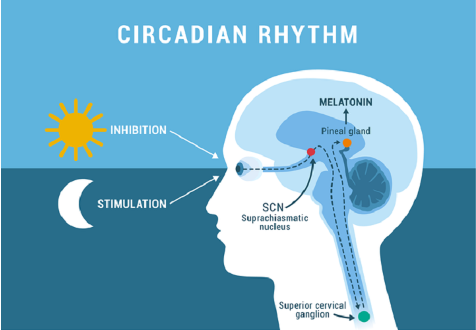
Figure 2. Circadian rhythm, source: https://www.okoa.org/articles/circadian-rhythm-see-what-is-it
Circadian lighting conditions formed by transmitted daylight present opportunities to enhance both energy efficiency and indoor health. These influential factors on circadian daylight can be categorized into four dimensions. These dimensions are: a) variation of the daylight source, which relies on solar and sky conditions; b) optical and morphological properties of the window glazing that effectively alter the transmitted light spectral power distribution and intensity; c) interior space design and surface spectral feature influence the transmitted light distribution within the space; and the last one is d) human factors that affect the amount of exposure to circadian daylight by varying the direction of the human gaze and their corneal height. Engineers and architects can focus on dimensions in the context of these four factors. Window properties and indoor spatial conditions promote a healthy indoor environment influenced by circadian light, as dimensions of daylight source and Human factors are unpredictable and uncontrollable (Ardabili et al., 2025).