3. Enhance – AR for Deeper Learning and Engagement
Augmented Reality (AR) tools and application
3.2 Practical Suggestions for Integration into the Learning Experience
Gamified learning environments or interactive 3D virtual worlds can challenge students to explore green infrastructure like trees and green roofs in a city to mitigate the effects of climate change like flooding and heatwaves. This makes learning about urban design both fun and informative.
Exercise: "Eco-Visionary" AR App
"Eco-Visionary" AR app allows students to explore a real-world location, e.g. a city park, and then interact with virtual 3D models, like green infrastructure, wildlife habitats and info panels, directly onto that space. Each virtual object comes with an informational panel explaining its ecological purpose and how it contributes to a more biodiverse city. By physically walking through their augmented design, students gain a deeper, more intuitive understanding of how individual ecological elements can connect to create a cohesive and vibrant urban ecosystem.
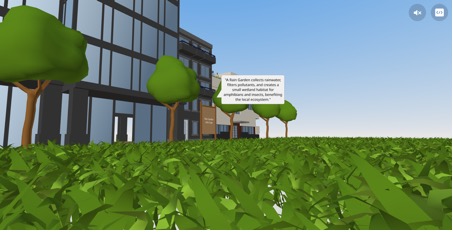
Image 2. "Eco-Visionary" AR App
By making learning more immersive, interactive, and directly relevant to the students' immediate environment, AR technology significantly strengthens their connection to urban ecosystems and promotes more effective knowledge building for future sustainable urban development.