1. Explore
Atoms
The laser emission
The laws of the Quantum Mechanics applied to the the electronic levels tell us that the rate of the decay is not the same for each couple of levels. Each transition has a characterisc decay time. Some transitions have aI very short decay time (i.e. the electron stays in the upper level for a minimal time) while other transitions may not occur for long time.
A system with a lot of identical atoms in a certain time N2 (in a volume unit) atoms have at least one electron in the level 2 which, has a higher energy than the corresponding level 1 (lower energy) where the electron can go.
The number of atoms ΔN2 which do this transition ( 2 to 1 ) in a certain amount of time Δt is given by the formula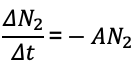
where the number A is called Einstein coefficent and is the inverse of the mean lifetime by spontaneous emission  of the electron in the level 2.
After the lifetime  the mean number of atoms in the level 2 is
  where
where 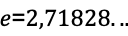 is the Napier number.
When the atom is hit by an electromagnetic wave whose frequency is the same of that of the atomic transition the photons of the wave force the atom to undergo the transition.
The fundamental difference of the stimulated emission as compared to the spontaneous emission is that the emitted photon has the same phase and direction of the incident wave.
Obviously we obtain an enhancement of the radiation if the number of the electrons (population) in the level 2 is higher than the population of the level 1.