1. Explore - Understanding Human Evolution as a Bio-Inspired Process
| Sito: | Bios4You |
| Corso: | (16) Human Evolution: From Early Hominins to Modern Humans |
| Libro: | 1. Explore - Understanding Human Evolution as a Bio-Inspired Process |
| Stampato da: | Επισκέπτης (Guest user) |
| Data: | martedì, 25 agosto 2026, 06:42 |
1.1 What Is Human Evolution?
Human evolution refers to the gradual biological and cultural changes that led from early hominin ancestors to Homo sapiens. These changes did not occur suddenly, but through small adaptations accumulated over long periods of time. Fossil evidence, comparative anatomy, and genetic studies allow scientists to reconstruct this evolutionary pathway and understand relationships between different hominin species.
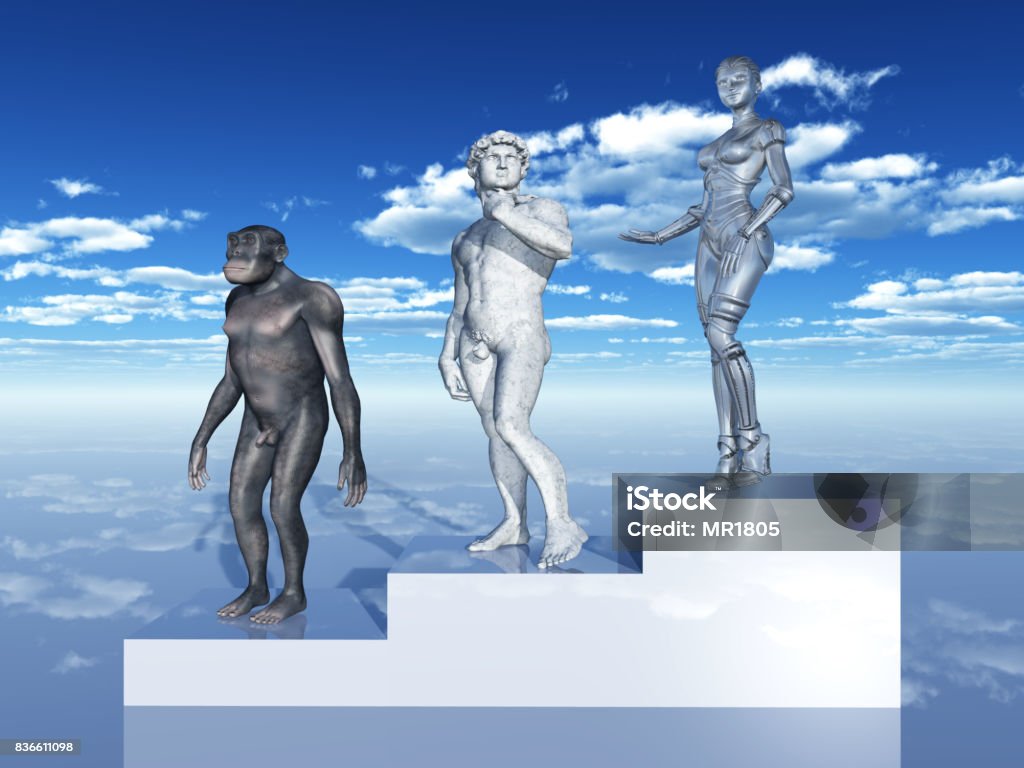
Human evolution (Image Source)
1.2 Early Hominins: The First Steps
The earliest hominins lived in Africa and showed the first clear signs of bipedalism—walking upright on two legs. This adaptation freed the hands for carrying objects and using simple tools, while also allowing more efficient movement across open landscapes.
Key characteristics of early hominins include:
- Upright posture and bipedal walking
- Smaller brain size compared to modern humans
- Strong jaws and large teeth adapted to a varied diet
- Survival closely linked to environmental conditions
1.3 The Genus Homo: Tools, Fire, and Migration
With the emergence of the genus Homo, human evolution entered a new phase. Species such as Homo habilis and Homo erectus developed more advanced stone tools, increased brain size, and greater cognitive abilities. These innovations allowed early humans to hunt more effectively, control fire, and migrate beyond Africa into new and challenging environments.
Important evolutionary developments include:
- Growth in brain volume and problem-solving skills
- Systematic tool production
- Use of fire for warmth, protection, and cooking
- Expansion into Europe and Asia
1.4 Neanderthals and Modern Humans
Neanderthals (Homo neanderthalensis) and early modern humans (Homo sapiens) shared many similarities but also important differences. Neanderthals were well adapted to cold climates, with robust bodies and powerful muscles, while modern humans developed lighter skeletons, more complex social structures, symbolic thinking, and advanced communication.
Comparative studies show:
- Differences in skull shape and brain organization
- Distinct tool cultures and survival strategies
- Evidence of interaction and interbreeding between species
1.5 Fossils as Evidence of Evolution
Fossils are one of the most important sources of information about human evolution. By comparing fossilized bones—especially skulls and limbs—scientists can identify evolutionary trends such as changes in posture, brain size, and facial structure. Fossil evidence allows researchers to place species on a timeline and understand how anatomical features evolved step by step.
1.6 Why Human Evolution Is Difficult to Imagine
Human evolution is often challenging to understand because it involves:
- Extremely long time scales
- Species that no longer exist
- Gradual changes that are difficult to visualize
For this reason, visual tools such as timelines, 3D models, and skeletal comparisons are essential for building a clear and meaningful understanding of evolutionary processes.
In the next section, learners will explore human evolution through interactive 3D models and a visual timeline. Augmented Reality will allow students to observe, compare, and analyze skeletal structures across different hominin species, turning evolutionary theory into a hands-on investigative experience.