1. Explore
| Site: | Bios4You |
| Course: | (1) Mutations and Superpowers |
| Book: | 1. Explore |
| Printed by: | Guest user |
| Date: | Tuesday, 25 August 2026, 6:10 AM |
Table of contents
- Mutations and Superpowers
- What does mutation really mean?
- How Can Mutations Affect an Organism?
- Point Mutations
- Why the Mutation’s Location Matters
- Silent Mutations
- Missense Mutations
- Nonsense Mutations
- Insertion Mutations
- Deletion Mutations
- Chromosomal Translocation
- How do mutations occur?
- Fixation of Mutations
Mutations and Superpowers
In modern science fiction and action movies, the words mutation and mutant are often used to explain superpowers. Popular characters from films and series such as Deadpool, Spider-Man, Heroes, and X-Men are shown gaining extraordinary abilities through genetic changes called mutations. These stories suggest that mutations can give humans special powers, such as super strength, regeneration, or the ability to change body shape.
However, in real biology, the meaning of a mutation is much more specific. A mutation is simply a change in the DNA sequence of an organism (Griffiths et al., 2019). Scientists study mutations to understand how traits change, how diseases develop, and how evolution works—not to create superhumans.
This raises important questions: What does a mutation really do in the human body? Can a person be born with dramatic abilities like those seen in movies, or gain powers after exposure to radiation or a genetically altered organism? Scientific research shows that while mutations can affect physical traits or health, they do not lead to sudden or extreme abilities like climbing walls or changing shape (Alberts et al., 2015). Instead, most mutations have small effects, no visible effect at all, or negative consequences for the organism.
Understanding the difference between fictional mutations and real genetic changes helps students develop scientific literacy and think critically about how biology is represented in popular culture (National Human Genome Research Institute, 2023).
What does mutation really mean?
The genome is the complete set of DNA in a living organism. It includes genes that code for proteins, as well as non-coding regions such as introns and pseudogenes, which do not directly produce proteins but still play important roles in regulation and structure (Alberts et al., 2015). Every species has its own unique genome. For example, humans and chimpanzees share about 99% of their DNA, yet the remaining 1% creates significant differences in appearance, behaviour, and abilities (Griffiths et al., 2019).
A useful way to understand the genome is to think of it as a blueprint for a house. The blueprint explains how the house should be built—its size, structure, and materials. In living organisms, the “building materials” are proteins, lipids (fats), and sugars. The genome determines which proteins are produced, which versions of genes (alleles) are used, and how much of each protein is made. This process is called gene expression (Strachan & Read, 2018).
However, genes do not work alone. The environment also strongly influences how an organism develops. For example, genes may provide the instructions for muscle growth, but muscles become stronger only with proper nutrition and physical activity. This interaction between genes and the environment explains why individuals with similar DNA can still develop different traits (Alberts et al., 2015).
Although every cell in the human body contains the same DNA, different cells use different genes. Skin cells and muscle cells, for instance, produce different proteins in different amounts. This selective gene activity shapes physical traits such as eye colour, hair colour, height, and body structure (Griffiths et al., 2019).
Because traits depend on DNA, any change in the genome can affect an organism. A mutation is a change in the DNA sequence that can occur randomly or be caused by environmental factors such as radiation or chemicals. Mutations can happen within genes or in non-coding regions of DNA. While some mutations have no visible effect, others can influence traits, health, or survival (National Human Genome Research Institute, 2023).
How Can Mutations Affect an Organism?
Living organisms can have many different kinds of mutations. Some mutations cause clear and serious changes, while others do not cause any noticeable effect at all. To understand this better, we can again use the house blueprint example. A random change in a carefully designed plan can lead to very different results (Alberts et al., 2015).
For instance, a small change might create a gap between a window and a wall, allowing cold air to enter the house. Another change could damage the plumbing system, making everyday life uncomfortable. In biology, similar small mutations can slightly affect how a protein works or how efficiently it is produced.
Sometimes, a large random change can cause serious problems. Removing a load-bearing wall from a house could cause the whole building to collapse. In the same way, some mutations strongly disrupt essential genes and can lead to diseases or developmental problems (Strachan & Read, 2018).
However, not all changes are harmful. Some mutations have no effect at all, such as replacing one roof tile with another identical one. In genetics, these are called neutral mutations. Very rarely, a mutation can even be beneficial. An example is lactose tolerance in humans—the ability of adults to digest milk—which became advantageous after the domestication of cattle (Griffiths et al., 2019).
The effect of a mutation mostly depends on:
- whether it changes a gene that codes for a protein or RNA,
- how important that gene is for the organism,
- and how strongly the gene is expressed (how much it is “turned on”).
Because genes interact in complex networks, even a small mutation can sometimes have wide effects, while other mutations remain unnoticed (National Human Genome Research Institute, 2023).
Point Mutations
The simplest type of mutation happens when one DNA letter, called a nucleotide, is replaced by another. This type of change is known as a point mutation or a single nucleotide variant (SNV) (Alberts et al., 2015).
If a point mutation is passed from parents to children and becomes common in a population, it is called a single nucleotide polymorphism (SNP). A change is usually considered an SNP only if it appears in at least a small part of the population, for example in about 1% of people (Griffiths et al., 2019).
For example, imagine that 98% of people have the DNA sequence:
…acgtgcgAtgattg…
but 2% of people have a slightly different version:
…acgtgcgTtgattg…
In this case, the DNA letter A is replaced by T at one position. This is an example of an A-to-T SNP.
If this SNP is located inside a gene, it is called an allele or gene variant. Different alleles can lead to small differences between individuals, such as eye color, height, or the ability to digest certain foods (Strachan & Read, 2018).
Most point mutations have no visible effect, but some can change how a protein works or how much of it is produced. In certain cases, point mutations are linked to genetic diseases, while in other cases they simply increase genetic diversity in a population (National Human Genome Research Institute, 2023).
Why the Mutation’s Location Matters
For point mutations, it is very important where the mutation happens in the DNA. A mutation can occur inside a gene or between genes. Mutations that happen outside genes often have little or no effect, because large parts of the genome do not directly code for proteins and contain repeated or regulatory sequences (Alberts et al., 2015).
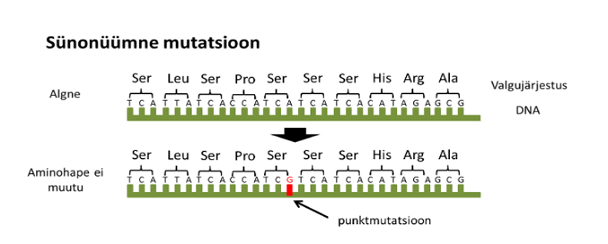
When a mutation occurs inside a protein-coding gene, its effect depends on whether it changes the protein. If the DNA change does not alter the amino acid sequence of the protein, it is called a synonymous mutation. This is possible because the genetic code is redundant, meaning that different DNA triplets (codons) can code for the same amino acid (Griffiths et al., 2019).
For example, the codons TCA and TCG both code for the amino acid serine. If a mutation changes the last letter from A to G, the protein remains exactly the same. As a result, the mutation usually has no effect on how the protein works.
Many synonymous mutations occur in the third position of a codon, also known as the wobble position. Changes in this position often do not affect the protein structure or function (Strachan & Read, 2018).
There are also neutral mutations, where one amino acid is replaced by another with similar chemical properties, such as charge or size. Because the new amino acid behaves in a similar way, the protein can often still function normally. These small changes usually do not harm the organism and help explain why genetic variation can exist without causing disease (National Human Genome Research Institute, 2023).
Silent Mutations
If a mutation does not change the organism’s visible traits, also called the phenotype, it is known as a silent mutation. In many cases, silent mutations do not cause noticeable effects, but the difference between silent and synonymous mutations is not always clear (Griffiths et al., 2019). Although synonymous mutations do not change the amino acid sequence of a protein, they can still have small effects. For example, different codons that code for the same amino acid may use different amounts of matching tRNA molecules. This can influence how fast a protein is produced, which may slightly affect cell function (Alberts et al., 2015). In most cases, silent and synonymous mutations have very little impact on the organism. These mutations demonstrate that genetic systems are flexible and can tolerate small changes without losing their function. This flexibility is important for evolution and long-term adaptation (Strachan & Read, 2018).
Figure 1 illustrates a synonymous mutation, where a change in the DNA sequence does not alter the amino acid sequence of the resulting protein.
Missense Mutations
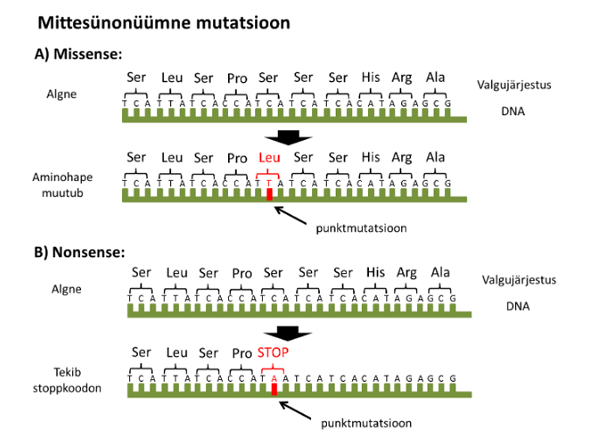
Figure 2. Missense and nonsense mutations in a protein-coding gene
In a missense mutation, one amino acid in a protein is replaced by another different amino acid. This change can affect the protein’s shape and function and may prevent it from working correctly. Many genetic diseases are caused by missense mutations because even a small change in protein structure can have serious effects (Alberts et al., 2015).
A well-known example of a missense mutation is sickle cell anemia. This disease is caused by a point mutation in the β-globin gene. In this mutation, the second base in one codon changes from adenine (A) to thymine (T). As a result, the amino acid glutamic acid is replaced by valine in the hemoglobin protein (Griffiths et al., 2019).
This small change has a large impact. The altered hemoglobin molecules stick together, causing red blood cells to become crescent-shaped instead of round. These abnormal cells cannot carry oxygen efficiently and break down more quickly than normal red blood cells. This leads to symptoms such as pain, fatigue, and increased risk of infections (Strachan & Read, 2018).
Nonsense Mutations
Nonsense mutations occur when a point mutation creates a stop codon too early in a gene. As a result, protein synthesis stops before the full protein is made. This leads to a shortened (truncated) protein, which usually does not work properly or does not work at all (Alberts et al., 2015) (see Figure 2).
Because proteins often need their full structure to function correctly, nonsense mutations are usually more harmful than synonymous or neutral mutations. The missing part of the protein can remove essential functional regions, making the protein unstable or useless (Griffiths et al., 2019).
Several serious genetic diseases are caused by nonsense mutations, including Duchenne muscular dystrophy and cystic fibrosis (Strachan & Read, 2018).
Example: Cystic Fibrosis
Cystic fibrosis is caused by mutations in a gene that codes for an ion channel protein, which controls the movement of salt and water in certain tissues, especially in the lungs. When this protein does not function correctly, thick mucus builds up in the airways. This mucus makes breathing difficult and leads to frequent lung infections.
Although cystic fibrosis cannot be cured, modern treatments can help manage symptoms and improve quality of life. This example shows how a single mutation that introduces an early stop codon can have serious effects on the whole organism (National Human Genome Research Institute, 2023).
Insertion Mutations
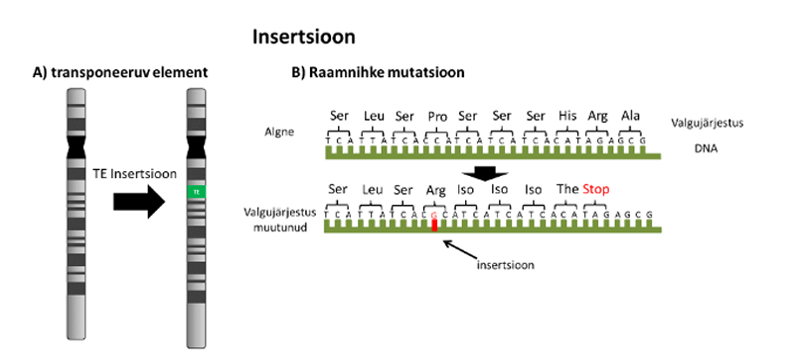
Figure 3. An insertion
An insertion mutation happens when one or more nucleotides are added to the DNA sequence. Insertions can be very small or extremely large, sometimes involving thousands or even millions of nucleotides. Small insertions often occur during DNA replication or DNA repair processes (Alberts et al., 2015).
If nucleotides are inserted into a protein-coding gene and the number of added nucleotides is not divisible by three, the mutation causes a frameshift mutation. This shifts the reading frame of the gene, changing all the codons that follow. As a result, the entire protein sequence is altered, and the protein usually loses its normal function (see Figure 3) (Griffiths et al., 2019).
Frameshift mutations usually affect only one protein because genes are separated by long non-coding regions in the genome. However, the effects on that single protein can be very serious and often lead to disease.
Insertions can also be caused by transposable elements (TEs). These are DNA sequences that can move to different locations within the genome. The most common transposable element in humans is the Alu element, which is about 300 base pairs long and occurs in hundreds of thousands of copies in the human genome (Strachan & Read, 2018).
Transposable elements can move by two main mechanisms:
- “Cut and paste”, where the element is removed from one location and inserted into another.
- “Copy and paste”, where a copy of the element is inserted into a new location while the original remains.
Scientific studies have shown that Alu insertions can disrupt genes and are linked to genetic disorders such as hemophilia and breast cancer (National Human Genome Research Institute [NHGRI], 2023).
Deletion Mutations
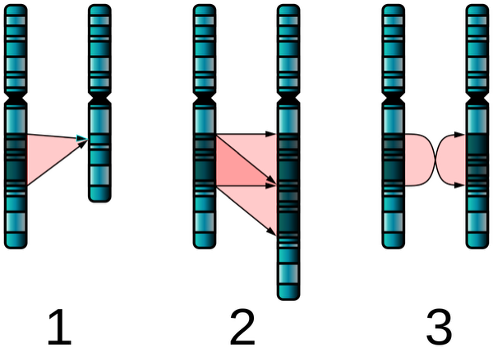
Figure 4: Chromosomal Deletion, Duplication, and Inversion
A deletion mutation happens when one or more nucleotides are removed from the DNA sequence. Unlike insertions, deletions are usually irreversible, because the lost DNA cannot be restored once it is removed (Alberts et al., 2015). Although some transposable elements can move out of the genome, deleted DNA sequences are permanently lost.
Deletions can have serious effects, especially when a large section of a chromosome is removed. This can lead to loss of heterozygosity, meaning that only one copy (allele) of a gene remains. If the remaining allele is faulty and the deleted allele was healthy, the organism may experience severe biological consequences (Griffiths et al., 2019).
Small deletions inside protein-coding genes can also cause frameshift mutations, which change the reading frame of the gene and usually result in a non-functional protein.
Duplication Mutations
In contrast to deletions, duplication mutations occur when a segment of DNA is copied one or more times. These mutations often happen because of errors during genetic recombination (see Figure 4) (Strachan & Read, 2018).
Small duplications cause certain DNA sequences to appear repeatedly, leading to changes in copy number variation (CNV). This means that some genes may be present in more or fewer copies than normal, which can affect how much of a protein is produced.
Changes in repeat numbers can cause genetic disorders. A well-known example is Huntington’s disease. The huntingtin gene (HTT) normally contains 27–35 repeats of the three-nucleotide sequence CAG. When the number of repeats exceeds 40, it leads to a progressive neurodegenerative disorder affecting the central nervous system (NHGRI, 2023).
Large duplications involving whole genes or chromosome segments can increase gene expression and are often associated with diseases such as cancer, where excessive cell growth occurs.
Inversion Mutations
An inversion mutation happens when a segment of DNA breaks and is reinserted in the opposite direction within the chromosome. Although this sounds dramatic, inversions often do not cause major harm, because no genetic material is lost (Griffiths et al., 2019).
In many cases, the order of genes on a chromosome does not strongly affect how the organism functions. However, problems may occur at the breakpoints, where the DNA breaks and rejoins. Important genes can be disrupted at these locations.
There are two main types of inversions:
- Paracentric inversions: occur within one arm of a chromosome and do not include the centromere.
- Pericentric inversions: include the centromere within the inverted segment.
Chromosomal Translocation
A chromosomal translocation occurs when a segment of one chromosome breaks off and attaches to another chromosome or to a different location on the same chromosome. This type of mutation changes the position of genes, which can affect how they function (Griffiths et al., 2019).
There are two main types of chromosomal translocations:
Balanced Translocation
In a balanced translocation, no genetic material is lost or gained—DNA segments are simply rearranged. In many cases, individuals with balanced translocations do not show visible symptoms. However, problems may appear during reproduction, as balanced translocations can increase the risk of infertility or genetic disorders in offspring (Strachan & Read, 2018).
Unbalanced Translocation
An unbalanced translocation occurs when genetic material is lost or duplicated. This often leads to serious biological consequences because the normal balance of genes is disrupted. Unbalanced translocations are associated with conditions such as cancer, infertility, and genetic disorders including Down syndrome (NHGRI, 2023).
Translocations can also result in gene fusions, where parts of two different genes become joined together. These fused genes may produce abnormal proteins that interfere with normal cell function and can contribute to disease development, especially in certain cancers (Alberts et al., 2015).
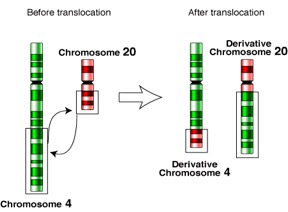
Figure 5. Chromosomal translocation
How do mutations occur?
Mutations arise from changes or errors in the DNA sequence, such as breaks, mismatches, or missing bases. These errors happen mainly for two reasons: external environmental factors or random mistakes during DNA replication (Alberts et al., 2015).
Environmental Factors
Environmental factors that cause mutations are called mutagens. They include different types of radiation and chemical substances.
For example, ultraviolet (UV) radiation from sunlight often causes point mutations by changing one DNA base into another, such as replacing guanine (G) with thymine (T). This type of damage is common in skin cells and is strongly linked to skin cancer (Griffiths et al., 2019).
Certain chemicals can also damage DNA. One example is ethidium bromide, a substance that inserts itself between DNA bases. This distorts the DNA structure and increases the chance of replication errors (Strachan & Read, 2018).
DNA Damage and Repair
DNA damage does not always result in a mutation. Cells have several DNA repair mechanisms that constantly check and fix errors in the genome. However, DNA repair is not always perfect. Sometimes, the repair system inserts the wrong nucleotide opposite a damaged base. When this happens, a mutation—a permanent change in the DNA sequence—can occur (Alberts et al., 2015).
Mutation Rate During Cell Division
Every time a cell divides, the entire DNA sequence must be copied. In humans, this means copying about 12 billion nucleotides (both DNA strands of a diploid cell). The enzyme responsible for this process, DNA polymerase, is extremely accurate and makes only about one mistake per 100 million nucleotides (Griffiths et al., 2019).
Even with this high accuracy, the large size of the human genome means that hundreds of new mutations can appear during each cell division. Most of these errors are corrected by DNA repair systems or by the proofreading function of DNA polymerase, which fixes about 99% of mistakes.
Types of Errors Made by DNA Polymerase
DNA polymerase can make different kinds of errors:
- Mismatches: incorrect nucleotides are added, forming wrong base pairs (for example, A–C instead of A–T).
- Slippage: the enzyme slips forward or backward along the DNA strand, causing insertions or deletions of nucleotides.
If these errors are not corrected, they may become permanent mutations.
Fixation of Mutations
A mutation becomes fixed when DNA repair mechanisms fail or repair the damage incorrectly. During the next round of DNA replication, the mutated strand serves as a template, and the mutation is copied into new DNA. At this point, the cell no longer recognizes it as an error (NHGRI, 2023).
Mutations in somatic cells (body cells) are passed only to daughter cells and are not inherited by offspring. Mutations in germ cells (sperm or egg cells), however, can be passed on to the next generation.
Why Imperfect Repair Is Important
Although mutations can be harmful, perfect DNA repair would stop evolution. Without mutations, there would be no genetic variation, no natural selection, and no adaptation to changing environments. Genetic variation is essential for populations to survive and evolve over time (Griffiths et al., 2019).
How Many Mutations Occur?
Mutation rates vary greatly between organisms:
- Viruses have very high mutation rates, about 1 mutation per 10,000 nucleotides per infection cycle.
- Humans have much lower mutation rates, about 1 mutation per 30–40 million nucleotides.
Despite this low rate, humans pass approximately 100–200 new mutations to each child because of the large size of the human genome (Strachan & Read, 2018).
Are All Mutations Harmful?
Most mutations are harmful or neutral, because protein sequences have been highly optimized through evolution. Studies in fruit flies show that about 70% of nonsynonymous mutations—those that change amino acids—are harmful (Griffiths et al., 2019).
Beneficial mutations are rare, but they play a key role in evolution. A real example is lactose tolerance in humans. Mutations that allow adults to digest milk became beneficial after humans began domesticating cattle. However, whether a mutation is useful often depends on the environment. If conditions change, a once-beneficial mutation may no longer provide an advantage (NHGRI, 2023).
Hollywood vs Reality
In movies and comics, mutations often give characters superpowers. In reality, this is not possible. Dramatic abilities would require many complex mutations occurring at the same time in all body cells—and in germ cells to be inherited. Such changes are biologically unrealistic (Alberts et al., 2015).
For example, Spider-Man’s abilities would require coordinated changes in muscles, bones, nerves, and metabolism across the entire body—something that cannot happen through normal mutations.
When Are Mutations Passed to Offspring?
- Mutations in most adult body cells are not inherited.
- Mutations in stem cells affect only the cells that develop from them.
- Only mutations in germ cells (sperm or egg) can be passed on to future generations.