1. Explore
| Site: | Bios4You |
| Course: | (2) The Risks of Gene Editing: What Could Go Wrong? |
| Book: | 1. Explore |
| Printed by: | Guest user |
| Date: | Tuesday, 25 August 2026, 6:11 AM |
How Gene Editing Works
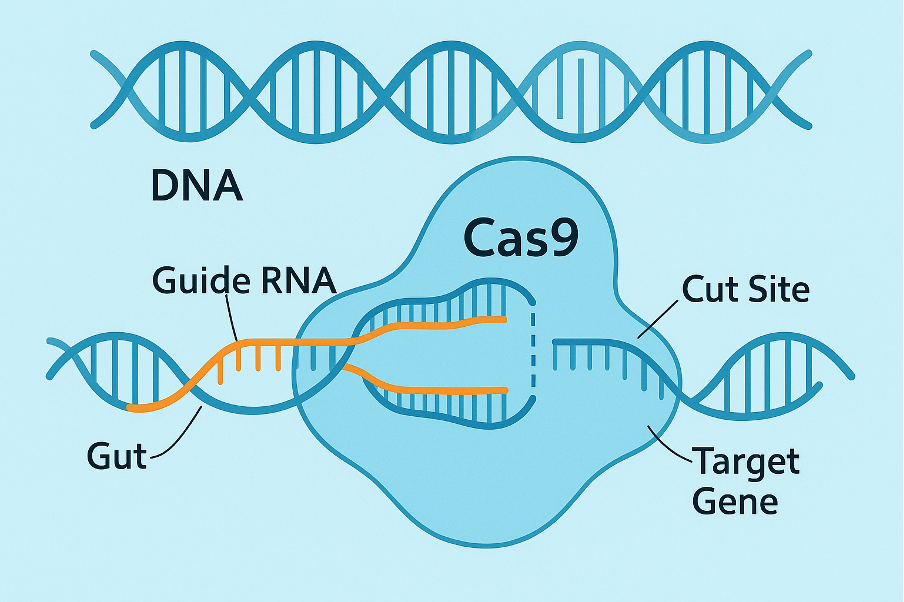
Figure 1. A simplified diagram of CRISPR-Cas9 editing a DNA strand inside a human cell.
Gene editing is a modern biotechnology method that allows scientists to change DNA. One of the most important tools for gene editing is CRISPR-Cas9. This technology was adapted from a natural defence system found in bacteria (Doudna & Sternberg, 2017).
CRISPR-Cas9 works like molecular scissors. It cuts DNA at a specific place. After the cut, scientists can remove, replace, or add genetic material. In this way, they can change genetic traits in plants, animals, or humans.
Gene editing has many possible benefits. Scientists have used CRISPR to study treatments for genetic diseases such as sickle cell anaemia and muscular dystrophy (Lander, 2015). In agriculture, gene editing can help crops become more resistant to pests, drought, or disease. Some researchers have also suggested using gene editing to reduce mosquito populations that spread diseases like malaria.
However, gene editing also involves serious risks. One major problem is off-target effects, when CRISPR cuts the wrong part of the DNA. This can cause unintended genetic changes that may be harmful (UNESCO, 2021). These effects might not appear immediately and could even be passed on to future generations if embryos are edited.
Another risk is linked to how genes interact with each other. A single gene often has several functions. Editing one gene to solve a problem may accidentally affect other important processes in the body, leading to unexpected consequences.
One of the most controversial cases happened in 2018, when a scientist in China announced the birth of gene-edited babies. The embryos were edited to make them resistant to HIV. This caused strong international criticism because the long-term health effects were unknown and the babies could not give informed consent (Cyranoski, 2019). The scientific community described the experiment as unethical and irresponsible.
In addition to scientific risks, gene editing raises ethical and social questions. Will everyone have equal access to this technology, or only wealthy people? Could genetic enhancement increase inequality or discrimination? These concerns show why gene editing must be carefully controlled and discussed by society.
Ethical Concerns
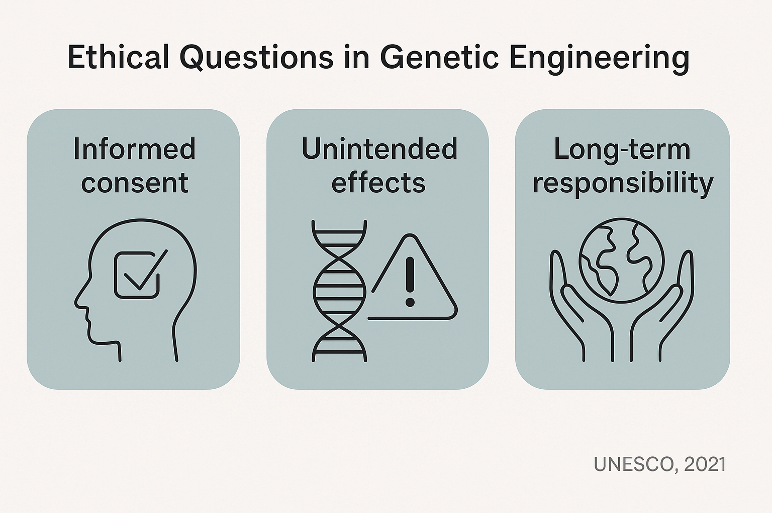
Figure 2. Ethical questions in genetic engineering include informed consent, unintended effects, and long-term responsibility (UNESCO, 2021).
Apart from biological risks, gene editing also raises serious ethical concerns. One important question is fair access. Will gene editing be available to everyone, or only to wealthy people? If only some groups can afford genetic treatments or enhancements, this could create a genetic class divide in society.
Another concern is the idea of designer babies. While gene editing could help prevent serious genetic diseases, some people worry that parents might want to choose traits such as appearance, intelligence, or physical strength. This could increase discrimination and put pressure on society to value certain genetic traits more than others.
There are also important questions about rules and responsibility. Should scientists be allowed to edit human embryos? Who should decide what kinds of gene editing are acceptable? Governments, scientists, and international organisations all play a role, but clear laws and ethical guidelines are still developing.
Because the effects of gene editing can last for generations, scientists must think about long-term responsibility. Decisions made today could affect future children, ecosystems, and societies. For this reason, education and public discussion are essential to help people understand both the benefits and the risks of gene editing (UNESCO, 2021)
The Role of Education and Public Dialogue
For young people today, it is important to understand how gene editing works—not only the science behind it, but also the ethical questions it raises. Gene editing can influence many parts of your future: the food you eat, the medicine you use, and how society thinks about health, fairness, and responsibility.
Schools, museums, and digital tools can help make these complex ideas easier to understand. Augmented Reality (AR) technologies are especially useful because they allow students to see what normally stays invisible. For example, an AR app can show how DNA is edited inside a cell or how changing one gene may affect an entire organism.
When students learn through interactive tools, science becomes more real and meaningful. Education and open discussion help young people become informed citizens who can take part in important decisions about new technologies and their impact on society (UNESCO, 2021).