Introduction
| Site: | Bios4You |
| Course: | (26) Learning from Nature: How Biomimicry Inspires New Innovations |
| Book: | Introduction |
| Printed by: | Guest user |
| Date: | Tuesday, 25 August 2026, 6:10 AM |
Introduction
Everywhere we look, nature offers intelligent solutions to problems that humans also face. Birds, insects, plants and even microorganisms have taken billions of years to evolve and develop ways to survive, adapt and thrive. Today, scientists and engineers are studying these solutions in detail through a field called biomimicry, which literally means “imitating life”. Biomimicry is not about blindly copying nature's designs, but learning from its principles to create sustainable, efficient and innovative technologies for our world.
This learning unit will guide students through the fascinating world of biomimicry. Using the three E’s methodology — Explore, Execute, Enhance, learners will first discover the science behind nature-inspired designs, then engage in hands-on and AR-supported activities, and finally reflect on how biomimicry could solve real-world problems.
What is Behind the Structure of Biomimicry in Nature?
Nature’s designs are never random. They are the product of millions of years of trial and error through evolution, where only the most efficient and resilient solutions survive. Every leaf, feather, shell, or ecosystem we encounter carries within it a blueprint that has been tested and refined over countless generations. Biomimicry is the science and the art of paying attention to these natural blueprints, learning from them, and applying their lessons to human challenges.
When scientists and engineers study biomimicry, they often look at nature on three interconnected levels. The first is form the shape or physical structure of an organism. A simple yet powerful example is the lotus leaf: covered in microscopic waxy bumps, its surface repels water and dirt, a phenomenon that has inspired self-cleaning paints and glass.
The second level is process how something works or functions in nature. The kingfisher bird, for instance, dives into water with almost no splash thanks to the perfect proportions of its beak. By mimicking this design, Japanese engineers reshaped the nose of the Shinkansen bullet train, making it faster, quieter, and more energy-efficient.
The third level is system how different parts of nature interact in harmony. A forest, for example, operates as a closed-loop system where every resource is recycled and nothing is wasted. On a smaller scale, termite mounds reveal natural ventilation systems that keep their interiors cool in extreme African heat. Inspired by this, architects in Zimbabwe created sustainable buildings that regulate temperature without the need for air conditioning.
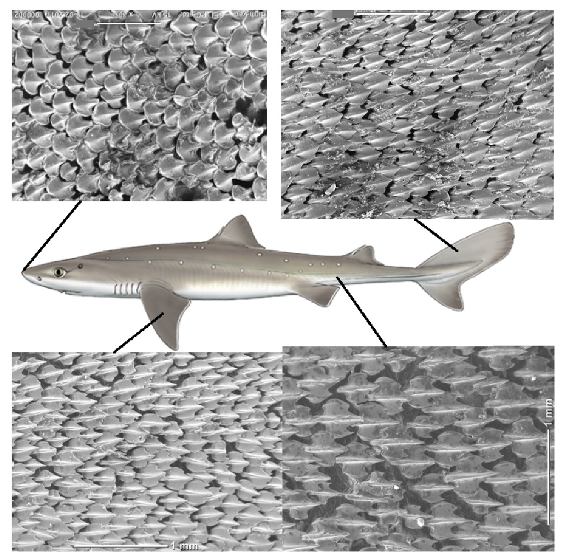
Even the seemingly rough texture of shark skin hides a remarkable secret: tiny ribbed scales called dermal denticles. These scales reduce drag in water and prevent microorganisms from attaching. This discovery has led to faster swimsuits and antibacterial surfaces in hospitals, where reducing infection risk is critical.
Together, these examples reveal a powerful truth: nature is not just a source of beauty but also of brilliant engineering solutions. By studying its designs whether at the level of form, process, or system we can create technologies that are not only innovative but also sustainable, helping us build a future that works in harmony with the planet rather than against it.
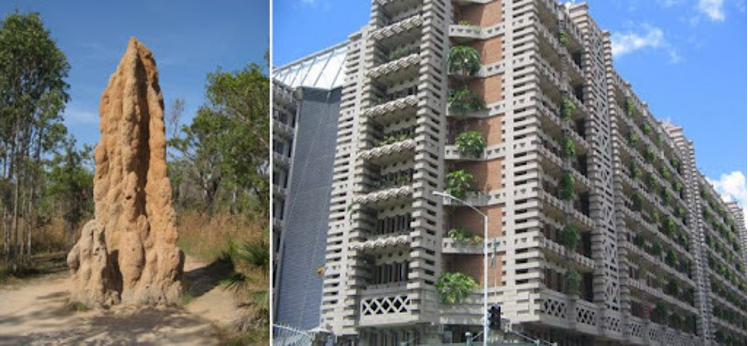
Figure 1-A termite mound next to the Eastgate building.