4. Real World Case Studies
| Site: | Bios4You |
| Course: | (6) From Lab to Field: How Scientists Test Microbial Clean‑Up in Real Ecosystems |
| Book: | 4. Real World Case Studies |
| Printed by: | Guest user |
| Date: | Tuesday, 25 August 2026, 6:10 AM |
4. Real World Case Studies
Before diving into specific examples, it's important to understand the purpose of studying real-world projects in microbial bioremediation:
Real-world case studies provide concrete evidence of how bioremediation strategies are designed, implemented, and evaluated in complex environmental conditions. They reveal what works, what challenges arise, and how scientists adapt methods to local ecosystems.
Below you’ll find two well-documented field projects, one focused on uranium-contaminated groundwater and the other on marine oil spill cleanup, each showcasing how microbes have been used successfully to address real pollution problems.
Case Study 4.1: Uranium‑Contaminated Groundwater in a Mining‑Impacted Aquifer
- Problem & Location: Groundwater previously impacted by uranium mining activities contained dangerously high levels of soluble uranium (U(VI)), posing risks to human health and ecosystems.
- Approach: Scientists stimulated native Geobacter species, particularly Geobacter metallireducens, by injecting acetate as an electron donor into the aquifer (turn0search21). This enhanced the microbial reduction of U(VI) to less-soluble U(IV), which precipitates out of groundwater.
- Results: Within approximately 40 days, downgradient wells showed uranium levels reduced to below regulatory health risk levels, while upgradient wells remained unchanged, highlighting the regional effectiveness (turn0search21). Biometric and molecular monitoring confirmed increased activity of Geobacter, particularly expression of stress-response genes like cydA and sodA (turn0search6, turn0search14).
- Significance: This pilot field trial confirmed that stimulating native microbial populations can safely and effectively immobilize uranium in situ, with minimal ecological disruption.
Case Study 4.2: Marine Oil Spill Bioremediation in the Gulf of Mexico
- Problem & Context: During the Deepwater Horizon oil spill, widespread hydrocarbon contamination threatened marine wildlife, coastal ecosystems, and local fisheries.
- Approach: Following the spill, microbial monitoring showed a surge in native oil-degrading bacteria, especially Alcanivorax borkumensis and Oleispira antarctica. Their growth was further enhanced by nutrient addition (nitrogen and phosphorus) to support biosurfactant-producing microbial communities (turn0search1, turn0search26, turn0search22).
- Results: These native populations quickly became dominant in affected zones, accelerating hydrocarbon breakdown. Field studies confirmed effective contaminant degradation without introducing foreign species (turn0search1, turn0search7).
- Significance: This project demonstrated that native marine bacteria, when stimulated correctly, can play a powerful role in cleaning oil spills naturally and sustainably.
These two real-world examples highlight how bioremediation strategies are tailored to specific pollutants and ecosystems. In both projects, scientists worked with native microbial communities, stimulating and monitoring their natural activities to achieve measurable cleanup results safely and cost-effectively. Field case studies like these allow students to see how biology, chemistry, and environmental science come together to solve pollution problems.
In situ stimulation of Geobacter species to remove uranium: field demonstration (2003) including gene expression of cydA and sodA (Lovley et al.)
- Field study showing Alcanivorax borkumensis dominance and activity in marine oil spill zones (post‑Deepwater Horizon)
- Review of hydrocarbon bioremediation mechanisms and microbial response in real oil spill eventsFrontiers+15PMC+15PMC+15
- More on G. metallireducens reducing uranium and vanadium in polluted aquifers (Wikipedia summary) NRC Web+13Wikipedia+13ScienceDirect+13
AR Integration in Microbial Bioremediation Field Testing
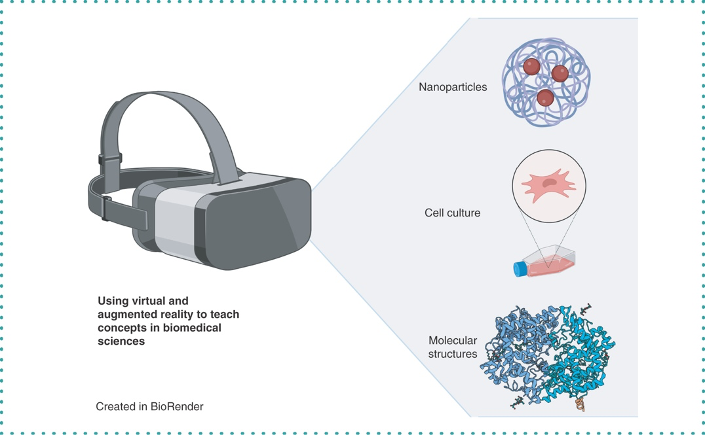
Fig 1- AR in biomedical science, source: Hemme et al., 2023
As microbial bioremediation strategies transition from laboratory setups to complex field environments, scientists face several challenges: monitoring microbial behavior in situ, communicating spatial and temporal data to stakeholders, and ensuring ecosystem safety. Augmented Reality (AR) is increasingly being explored as a digital interface that can enhance visualization, real-time monitoring, and data interpretation in environmental sciences. While AR has been widely applied in environmental education and industrial monitoring, its use in microbial bioremediation is emerging, supported by advancements in geospatial data integration, omics visualization, and field-based digital interfaces.
1. AR for Visualizing Microbial Activity and Pollutant Degradation
AR can help scientists visualize microbial interactions with pollutants in 3D, overlaid onto real-world environments. In field trials, understanding where and how microbes operate, especially in subsurface or aquatic systems, is critical. For example, during in situ uranium bioremediation, spatial understanding of zones where Geobacter species are active is crucial for evaluating remediation success.
Studies have demonstrated that AR can be used to overlay environmental geospatial data, such as pollutant concentrations, groundwater flow, or nutrient distribution, onto physical locations using tablets or AR glasses (Silva & Gültekin, 2021). This allows field researchers to "see" where microbial activity is expected to peak and helps correlate degradation performance with environmental variables like pH, redox potential, or bioavailability.
2. AR and Multi-Omics Integration in Field Monitoring
One of the key challenges in field testing is the interpretation of multi-omics data (e.g., metagenomics, transcriptomics) collected from sampling wells and soil cores. Traditionally, these datasets are analyzed in labs and visualized on computers. However, AR can allow real-time, location-based visualization of microbial gene expression or population shifts.
For example, using an AR interface, researchers could point a device at a monitoring well and view the relative abundance of genes associated with uranium reduction (e.g., cydA, sodA) or hydrocarbon degradation pathways in oil-impacted soils (Guo et al., 2023). This approach not only supports spatial interpretation of complex microbial data but also facilitates collaboration between field teams and lab analysts.
Recent studies in microbial ecology have emphasized the benefit of AR in presenting metagenomic data in context, improving scientific communication, and enabling more intuitive decision-making during site monitoring (Wang et al., 2022).
3. AR for Risk Assessment and Ecological Safety
Field-scale microbial testing must address ecological and safety concerns, especially when genetically modified organisms (GMOs) are involved. AR can provide a visual risk map to highlight:
- Areas of potential microbial overgrowth,
- Edge zones where introduced microbes could spread,
- Degradation hotspots or toxic by-product zones.
This approach mirrors the use of AR in healthcare and biosafety, where real-time overlays are used to track contamination zones (e.g., Clean-AR for airborne risk mapping in hospitals; Schmidt et al., 2021). Adapting this strategy to environmental bioremediation could improve field response and containment planning.
4. AR-Supported Communication and Stakeholder Engagement
Large-scale bioremediation projects often involve multiple stakeholders: scientists, environmental regulators, landowners, and local communities. AR has proven effective as a science communication tool, allowing non-specialists to understand complex remediation strategies (Garzón et al., 2019).
In pilot studies, AR has been used to overlay proposed field intervention designs, such as bio-barrier zones or nutrient injection wells, on physical maps or live field settings. This enables stakeholders to visualize potential outcomes, assess site restoration timelines, and engage with the research process meaningfully.
Though still emerging in the field of microbial bioremediation, AR technologies are poised to significantly enhance field-scale operations, especially when integrated with omics data, geospatial analysis, and ecological monitoring. These applications align well with the transition "from lab to field," making invisible biological and chemical processes accessible, measurable, and understandable in real time. As environmental research continues to digitize and democratize, AR stands out as a promising tool to support both scientific rigor and public transparency.