Introduction. Bio-innovations in Designing Eco-cities
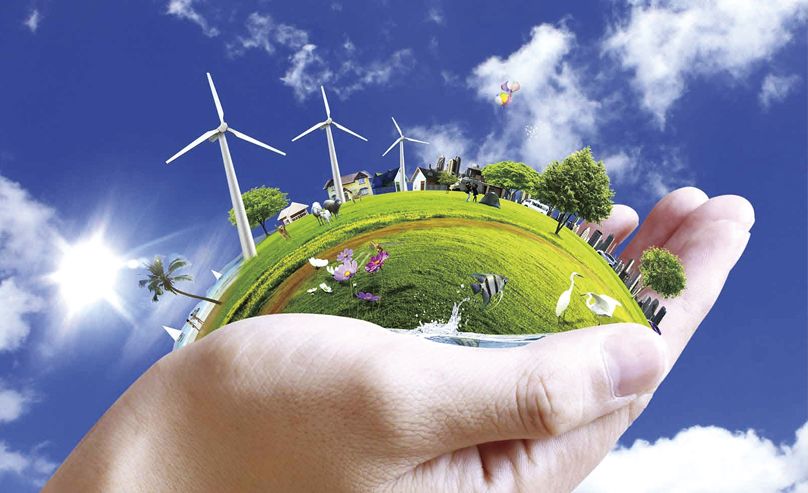
There are several benefits of developing Eco-cities which among other things, are largely green and eco-friendly. These include efficient land-use, habitat preservation and restoration, effective transport management and energy efficiency, efficient use of resources, emissions and pollution control and enhanced quality of life for the occupants.
An eco-city is a city built off the principles of living within the means of the environment.
This AR experience guides students through decision-based scenarios that demonstrate circular economy principles in action. Beginning with four waste objects placed on a classroom desk (plastic bottle, aluminum can, paper, apple), students interact with each item to access dedicated decision scenes. Using
Assemblr EDU's library, the experience employs realistic 3D waste models and result objects including post-it notes for recycled paper, cardboard boxes for reuse, farm environments for organic composting, and desert landscapes for improper disposal effects. Students navigate through three-option choice scenarios (recycle, reuse, improper disposal) leading to specific outcome scenes with educational content about decomposition times, environmental impact, and sustainability benefits.
Augmented Reality transforms abstract environmental concepts into concrete, interactive experiences. In waste management education, AR allows students to visualize the consequences of disposal choices through step-by-step decision making rather than theoretical study. The scene-based navigation approach enables students to explore cause-and-effect relationships between individual actions and environmental outcomes, supporting critical thinking about personal responsibility and circular economy principles while maintaining engagement through interactive 3D visualization.