Physics and Renewable energies
Basic level
Advancements in physics and related fields of scientific research have led to many breakthroughs in renewable energy technologies that, in turn, have given us the products that are today beginning to make a difference in the lives of people all around the world.
What does a scientist do in the laboratory, from getting an idea to developing a new solar cell or design for a wind turbine blade? How do scientists use physics, including quantum and solid-state physics, materials science, biophysics, polymer science, aerodynamics, thermodynamics, superconductivity and optics?
Although windmills have been around for centuries and the sun has warmed buildings in many parts of the world for generations, these technologies took a quantum leap beginning with scientific advances in the 1950s and 1960s. Photovoltaics - turning sunlight into electricity - got its first boost from early satellites and the space program. With the help of physics and advanced materials, the cost of solar electricity has been cut 100 fold in the past two decades. Solar panels will provide clean and reliable power in many parts of the world in the coming century, as will wind power.
The understanding of aerodynamics, sped along by the aerospace industry, has given us air foil designs that make electricity from modern wind turbines almost cost competitive with power from fossil fuels.
We must take physics out of the laboratory and into our home. What are the renewable energy products that today are in use by industry and consumers?
PV-roofing; thin-film solar cells and panels with record-setting efficiencies; solar walls (transpired solar collectors); stand-alone solar energy systems for the home and business; utility-scale PV applications that provide power to thousands of customers; small, single-building wind turbines and massive, utility-scale wind machines deployed in wind farms around the country.
What research in the lab today will give us the next generation of renewable energy products and systems?
Hydrogen generation and storage; fuel cells; thermophotovoltaics—using heat instead of sunlight to generate electricity and advanced wind turbines.
What role can physic and other scientific disciplines play in the development of clean energy technologies that will help solve serious environmental problems, such as global climate change and air pollution?
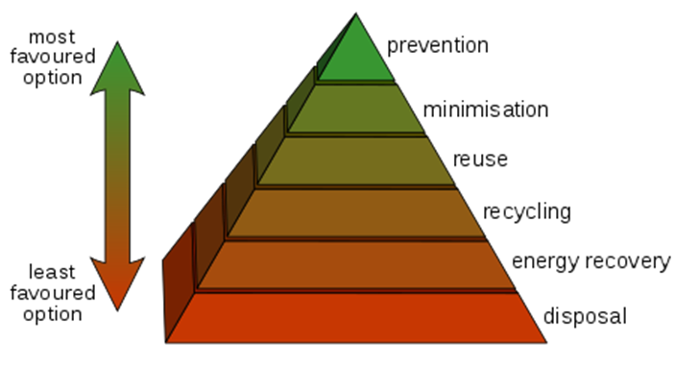
Linear economy is a wasteful system: many valuable materials are “lost” to landfills, and the products that are manufactured are consistently under-utilized.
Waste management (WM) represents a challenge for public authorities due to increased waste generation following urban population growth, economic burdens imposed on the municipal budget, and nuisances inevitably caused to the environment and local inhabitants.
In contrast to a linear economy, a circular economy aims to decouple growth from finite resource consumption and is restorative and regenerative by design.
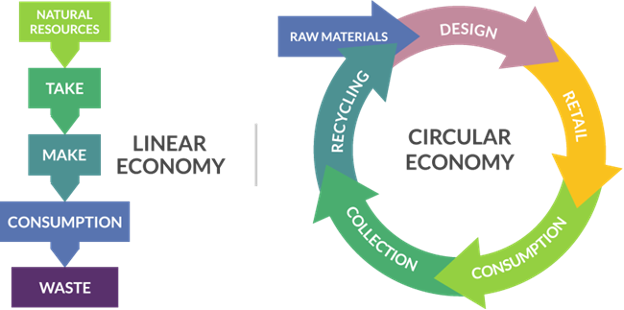
The transition towards a circular economy is challenging as only 9 percent of the goods and product of the global economy loop in one or the other way. Such a multi-disciplinary and multi-facets process inherently needs evidence-based and scientific sound information on the potential consequences of the decisions made.
Simultaneously with industrial growth, increasing population, rapid urbanization and improved community living standards, enormous quantities of materials are being wasted in the European Union (EU) in the last decades. EU statistics illustrate that up to 2.6 billion tons of waste (specified by Directive 2008/98/EC) was generated in 2014, of which most originates from economic activities such as construction (34.7%), mining (28.2%) and manufacturing (10.2%), while households contributed for 8.3%. Consumption patterns, economic wealth in combination with the projected population growth will likely lead to an increased amount of municipal solid waste in the near future. Overall, waste generation indicates the limited ability to use primary resources efficiently. The linear economy is a basic structured model that relies on the extraction of raw materials and their processing into products and potential by-products which, after usage, are treated as waste and mainly disposed of into landfills or dumpsites. In the past, this model has been considered as a successful and effective approach, able to manufacture products at competitive prices, boosting the economies of developing and industrialized countries, and encouraging human consumption.
However, concerns about the depletion of natural biotic and abiotic resources (coal, minerals, metals, wood, etc.), with consequent challenges in supply, have brought increased attention to the way we should manage the available resources. In this respect, waste disposal not only results in significant losses of materials but also incurs significant impacts on the environment finally reducing the quality of life. Ultimately, this may lead to exceed certain environmental thresholds or tipping points, affecting the current ecosystem irreversibly. Therefore, waste should be managed so that it does not poses risks to air, water, soil, plant and animals e.g., by the release of methane or leachate, eventually leading to impacts on human health and well-being which is absolutely to be avoided. Therefore, changing this linearity of material flows is high on the agenda as it is one of the profound challenges the EU is facing today. The linear “take-make-dispose” model of economic growth we relied on in the past is no longer suited for the needs of today’s socio-economic European system. A shift towards a circular economy as an industrial system that is restorative or regenerative will increase resource efficiency and reduce waste significantly. Furthermore, the circular economy model aims to create secure jobs in Europe, to boost innovations giving competitive advantages to EU industry and to provide increased level of protection to humans and the environment. It should also provide consumers with more durable and innovative products that provide monetary savings in a life cycle perspective and a better quality of life.
Let's reflect together
Although multiple waste policies and targets have been established since the 1990s, in practice the status of the EU economy remains far from being circular or sustainable. Clearly, optimizing waste management alone does not solve the linear economy problem—to “close the loop” and achieve a circular economy, it is equally important for example to examine product designs, production systems, and consumption habits.