4. Internet of Things
- View
The Internet of Things (IoT) was conceptually born in the early 1990s, however, the first device to feature this technology was produced in 1999 at the Massachusetts Institute of Technology. The Internet of Things is understood to be the latest era - at the time - of the Internet in which certain existing properties of the Internet infrastructure were exploited to enable devices to connect to each other (Khanna, Kaur, 2019). According to Botta et al. (2016), the Internet of Things is and will increasingly be the main source of big and rich data: in fact, it is estimated that in 2011 the number of IoT-connected devices exceeded the number of Earth's inhabitants, while by 2020 it was assumed that more than twenty-four billion devices could be active.
|
THE FIRST EXAMPLE OF AN IoT DEVICE
Figura 2 - Quentin Stafford-Fraser - Trojan Room Coffee Pot biography, CC BY-SA 3.0, The full story is available at: https://www.cl.cam.ac.uk/coffee/qsf/coffee.html |
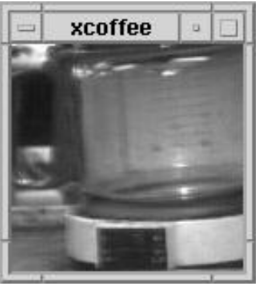

Figure 6 - Transition to IoT (Khanna, Kaur, 2019, p. 222)
The history of the Internet can be summarised in four main stages, the first of which is the one defined as the Internet of Content: in this first segment, there is the revolution in the world of communication thanks to the possibility for users to be able to use the infrastructure to exchange information thanks to e-mail and web pages. The second part of the transition towards the IoT is the Internet of Services, inaugurated by the emergence of e-commerce; later, thanks to the advent of social networks and other services aimed at implementing communications, such as Skype, the Internet of People was spoken of. The last phase of this process, as well as the current era of the Internet, can be identified in the advent of the Internet of Things, i.e., the possibility of connecting several devices together via the Internet in order to share information and data concerning various variables.
The IoT sectors are varied and include smart homes and home automation, wearables (hearing aids, visual aids, etc. or, for example, fitness trackers), smart grids (reading, managing, etc. the meters of domestic utilities such as water, electricity and gas supply), connected cars, industrial internet (remote control of industrial plants and machinery), and smart cities. The IoT applies to objects that have traditionally been purely analogue (e.g. clocks) but which, thanks to digital implementation, obtain greater performativity and the ability to perform additional functions.

Figura 3 - Varietà dell'Internet of Things