
Microbial Remediation
Microbes are microscopic organisms classified within two significant life domains: Archaea and Eubacteria. They encompass a wide range of life forms, including primary producers that convert light or chemical compounds into energy, as well as heterotrophs and decomposers that rely on external sources for sustenance. Ubiquitous in nature, microbes are found in virtually every environment on Earth.
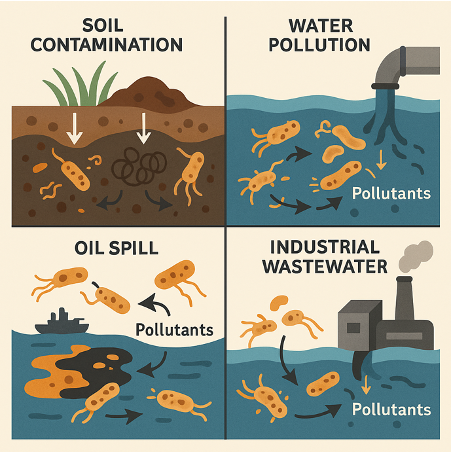
These tiny organisms play a significant role in human life. They help clean up pollutants, enrich soil fertility, contribute to advancements in food technology, and synthesize essential nutrients that support our health. In most cases, we coexist with microbes without being aware of their presence.
While many microbes provide protective functions, such as shielding us from harmful pathogens, others can have adverse effects. They may cause disease outbreaks, spoil food, or contribute to material decay and decomposition (Postgate, 2003).
- Microbial remediation strategies and technologies
Microbial remediation is a type of remediation method that utilizes the natural functions of microbes in the soil to render contaminants nontoxic, and it typically involves bioaugmentation and biostimulation. Because of their tiny quantity and low degrading ability, indigenous microbes
are constantly restricted by pollutant toxicity in a co-contaminated environment. Bioaugmentation involves combining obligatory degrading bacteria with strains that can withstand several heavy metals (HMs) to eliminate target contaminants (Fig. 3). Biostimulation enhances soil quality by introducing growth hormones and nutrients to promote the development of local microflora. However, various microbial technologies for remediation are discussed below.
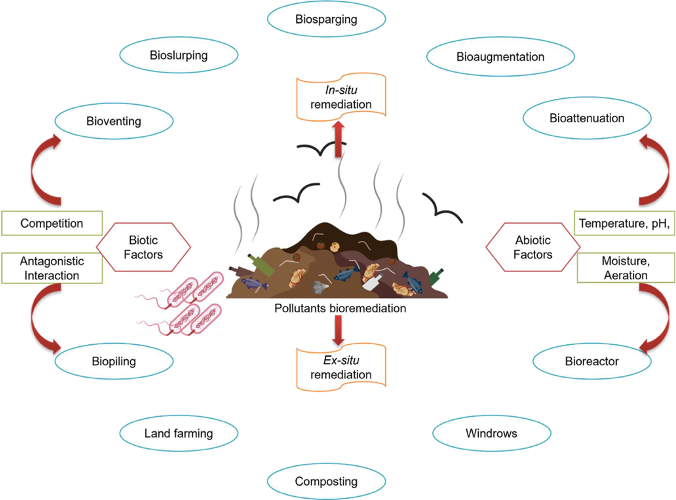
Figure 3-In vitro mechanisms of bacterial bioremediation in the polluted environment, source: Sharma et al., 2022
- In situ techniques for bioremediation
This remediation eliminates the need for polluted soil to be extracted and transported to off-site treatment facilities, thereby reducing the disruption to the soil, minimizing exposure to toxins for helpers and the community, and potentially lowering the costs of treatment. Soil permeability, pollution depth, temperature, and probable chemical deep leaching are all important field characteristics to consider (Fasani et al., 2018). In-situ clean-up of pollutants is depicted in Figure 4.
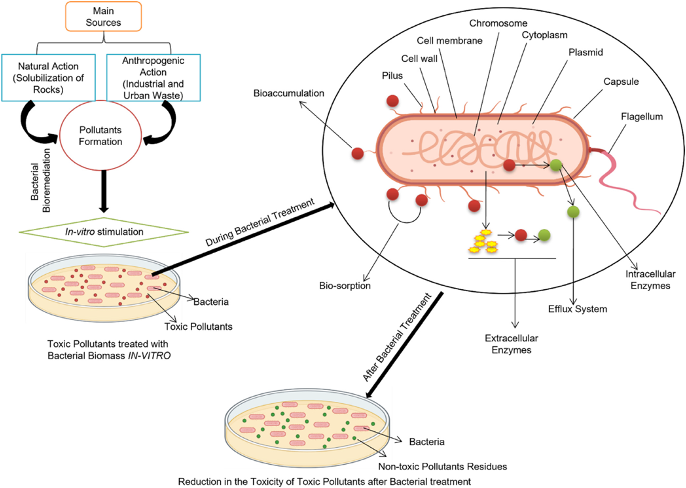
Figure 4. Microbial bioremediation for the restoration of the contaminated sites via in-situ and ex-situ remediation, source: Sharma et al., 2022
Microbes do not degrade significant pollutants, but instead affect their physicochemical characteristics (Sharma et al., 2021f; Sharma et al., 2021g). The remediation component includes intracellular accumulation, further cell complex formation, and oxidation-reduction or precipitation calculations. Hazardous heavy metals are widely present in industrial processes and are significant environmental pollutants. Molecular filtration for extracting metals from low-grade materials was simple and successful (Dhaliwal et al., 2020). Pseudomonas sp., Bacillus sp., Torulopsis bombicola, Desulfuromonas palmitatis, and other microorganisms may detoxify mechanical waste, sewage sludge, and remediate residues and soils polluted with heavy metals (HMs) (Priya and Nagan, 2015). Microbial biomass has diverse biosorption capabilities, and fundamental alterations occur between species. Their extraordinary biosorption ability is attributed to higher volume-to-surface ratios and the probable sites of complex chemical adsorption, primarily on cellular membranes (Li et al., 2019). Microorganisms are frequently more resilient and last longer in mixed cultures. Crop consortia are therefore metabolically dominant for biosorption of metals and are thus suited for large-scale applications. However, because the biosorption capacity of each microorganism cell varies, it is dependent on the specific treatment and testing conditions (Dhaliwal et al., 2020).