
Natural attenuation
Contaminants are converted into a less hazardous form or immobilized throughout biodegradation (natural attenuation). These transformation and immobilization mechanisms are primarily caused by microorganism biodegradation and, to a lesser extent, by interactions with naturally occurring chemical and geologic media sorption. This mechanism is specific to the contaminant and has been approved as an approach for treating components of fuel, such as BTEX (benzene, toluene, ethylbenzene, and xylene), but not for numerous other classes (Ganiyu et al., 2022). The period required for natural attenuation varies greatly depending on the site circumstances. Many contaminated sites may not necessitate an extensive clean-up strategy, and bioattenuation is both cost-effective and efficient. In reality, the United States has successfully employed a range of bioremediation approaches at prices that are roughly 80–90% cheaper than alternative cleaning technologies based on chemical and physical principles. Post-clean-up expenditures are significantly decreased with minimum site disruption. Industrial and environmental biotechnologies also favor novel approaches, leading to processes that utilize clean technologies to maximize output while generating fewer residues (Rhea and Clark, 2022). Because the majority of soils are oligotrophic or lack the necessary microbes, bio attenuation alone becomes insufficient and time-consuming in many circumstances.
These genetic and metabolic engineering techniques can aid in the bioremediation process (Liang et al., 2020). For editing of the gene as well as metabolic engineering, pollutant-inhabiting bacteria are a major ideal candidate as they are employed to survive and shelter in stressful circumstances of diverse toxic, refractory, and non-degradable xenobiotics. Furthermore, understanding the metabolic pathway appears to be crucial in analyzing microbial bioremediation (Plewniak et al., 2018). Figure 5 illustrates the role of metabolic reconstruction in synthetic bioremediation, employing both in situ and ex-situ routes for the treatment of hazardous pollutants.
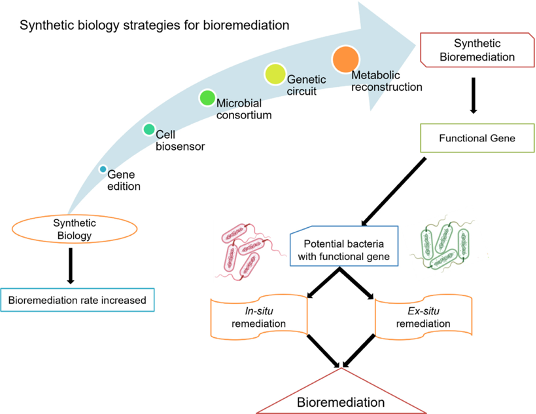
Figure 5. Role of metabolic reconstruction in synthetic bioremediation via in-situ and ex-situ routes to bioremediation of hazardous pollutants.