
Termite Mounds: Passive Thermal Regulation and Ventilation
Termite mounds, especially those constructed by Macrotermes species in sub-Saharan Africa, are sophisticated natural structures that maintain a remarkably stable internal temperature and humidity, despite extreme external climate conditions. This is achieved through an intricate network of air shafts and tunnels that promote passive ventilation. The termites use a system of controlled openings and chambers to drive convective airflow, regulating the mound’s internal microclimate to support their symbiotic fungus farming.
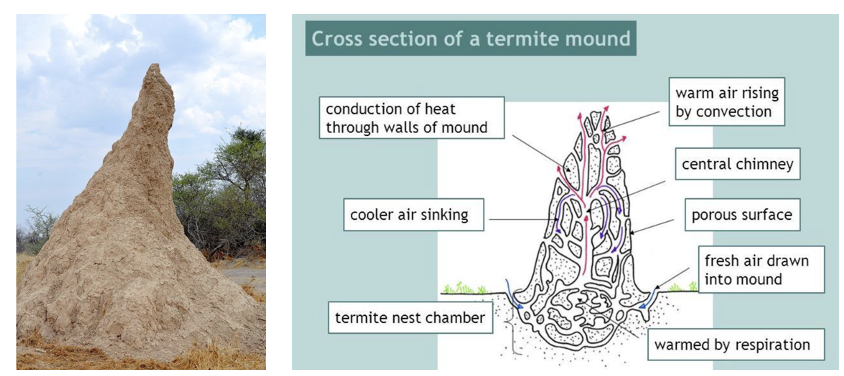
Fig 2. Termite Mounds and it’s ability, source: https://www.mickpearce.com/assets/images/biomimicry-architecure-09-1400x2133-77.jpg
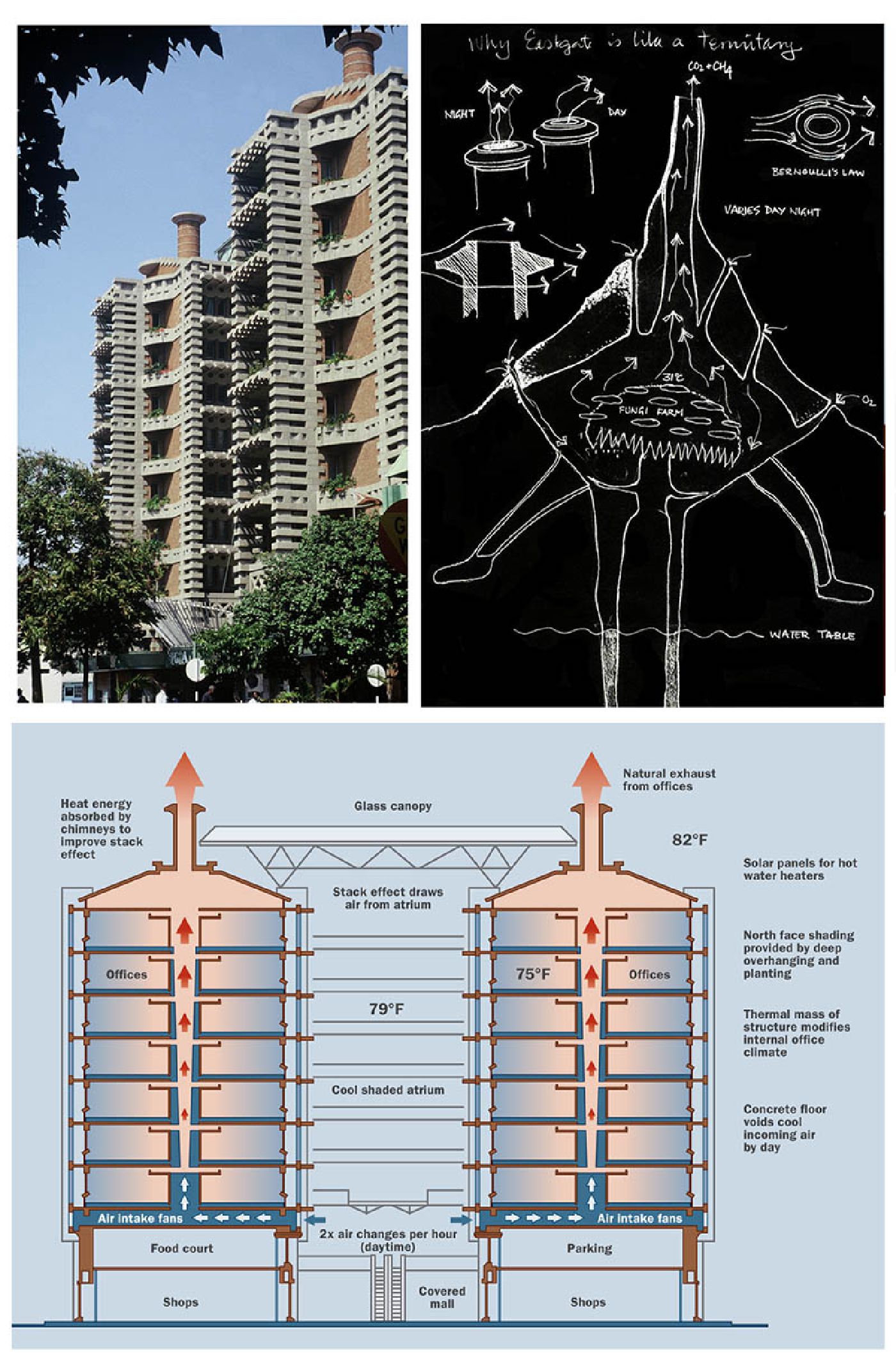
This natural model has inspired architects and engineers to develop energy-efficient buildings that regulate indoor temperature without relying heavily on mechanical systems. The most famous application is the Eastgate Centre in Harare, Zimbabwe, designed by architect Mick Pearce in collaboration with engineer Arup Associates. The building mimics termite mound principles to passively regulate air flow and temperature passively, reducing its energy consumption for ventilation and cooling by over 90% compared to conventional buildings of similar size (Turner & Soar, 2008).
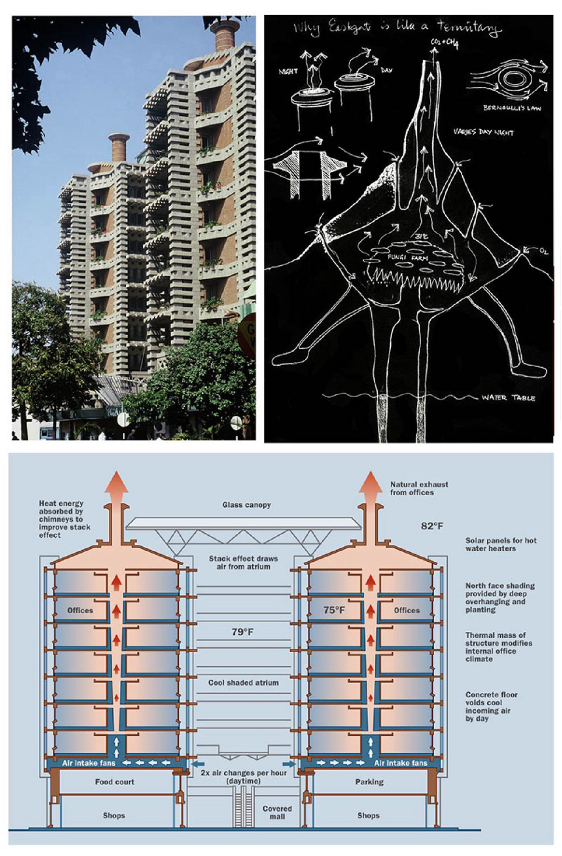
Fig 3. Eastgate Centre in Harare, Zimbabwe, source: https://www.mickpearce.com/assets/images/biomimicry-architecure-09-1400x2133-77.jpg