
Lotus Leaf: Self-Cleaning Surfaces
The lotus plant (Nelumbo nucifera) thrives in muddy aquatic environments, yet its leaves remain impeccably clean. This is due to the micro- and nanostructures on the leaf surface, which create a superhydrophobic effect, water droplets bead and roll off the surface, collecting and carrying away dirt particles. This phenomenon is commonly known as the "lotus effect".
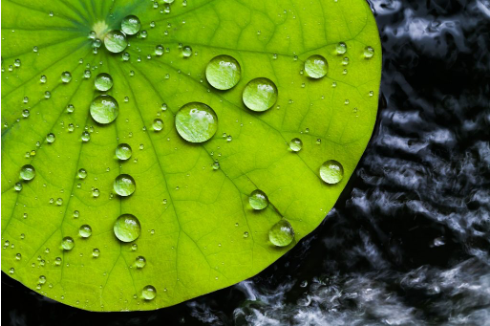
Fig 4. Lotus leaf effect, source: https://www.properla.co.uk/lotus-effect/
Inspired by this self-cleaning mechanism, materials scientists and architects have developed hydrophobic coatings for windows, solar panels, building facades, and tiles that repel water, thereby reducing maintenance costs. These materials reduce water consumption for cleaning and extend the lifespan of surfaces exposed to the elements. The innovation supports sustainable architecture by minimizing resource use and labor while maintaining visual and functional integrity.
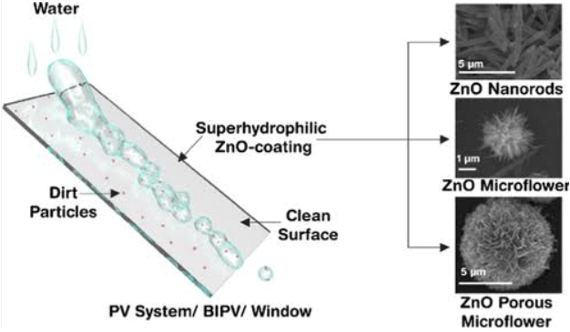
Fig 5. Hydrophilic and Superhydrophilic self-cleaning coatings by morphologically varying ZnO microstructures, source: https://shop.nanografi.com/blog/following-the-natures-lead-lotus-effect-selfcleaning/