
How plants harvest solar energy
Nature serves as a rich and dynamic source of inspiration for material innovations, paving the way for the creation of new materials known as "bioinspired materials." These materials exhibit improved structural and functional characteristics derived from existing compositions and substances (Liu et al., 2017). The concept of "bioinspiration" stems from the approach of drawing insights from natural structures and functionalities to engineer advanced artificial materials with superior properties (Zhang et al., 2024).
The biological sources of inspiration, whether from the plant or animal kingdom, provide the foundation for developing artificial materials that replicate or are influenced by their properties and functions (Zhang et al., 2020). Numerous biological structures have been investigated for their potential in bioinspired material design, including nacre, spider silk, lotus leaves, fly eyes, and butterfly wings (Sun et al., 2019). Plants, which first emerged approximately 400 million years ago, have undergone significant evolutionary advancements to adapt and thrive in harsh environments (Pires and Dolan, 2012). Despite their limited fundamental building blocks, plants exhibit remarkable structural and functional diversity, which has inspired the development of high-performance surfaces and interfaces, such as the Nepenthes-inspired directional liquid transport mechanism (Chen et al., 2016).
Furthermore, the integration of plant-inspired materials and structures has significantly improved the efficiency of various technologies, including energy harvesting, conversion, and storage systems, as well as water desalination and purification devices, separation and collection mechanisms, and structural reinforcement and toughening solutions (Yu et al., 2024).
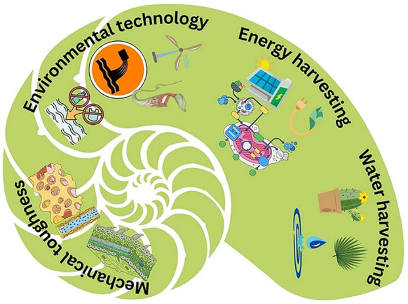
Figure 1. Graphical illustration of plant-inspired surfaces and interfaces for various applications, source: Wijerathne et al., 2025.
Photosynthesis is a complex process by which plants, algae, and some bacteria convert light energy into chemical energy. This process is fundamental to life on Earth, providing the energy and organic compounds that sustain most ecosystems.
The overall reaction of photosynthesis can be summarized by the following equation:
6 CO₂ + 6 H₂O + light energy → C₆H₁₂O₆ + 6 O₂
In this process, carbon dioxide and water are converted into glucose and oxygen using sunlight as the energy source( https://www.britannica.com/science/photosynthesis )
The process of photosynthesis is crucial for life on Earth. It produces oxygen as a byproduct, which is essential for most living organisms. Additionally, the organic compounds created through photosynthesis form the base of most food chains.
Photosynthesis is carried out by photoautotrophs, organisms that can produce their own food using light energy. These include plants, algae, and some bacteria
Understanding photosynthesis is not only important for biology but also for addressing global challenges. The fossil fuels we use today are the result of photosynthesis that occurred millions of years ago. Moreover, research into artificial photosynthesis could lead to new sustainable energy technologies (https://www.britannica.com/science/photosynthesis).
Plants, algae, and some bacteria have mastered the art of harnessing sunlight to sustain life on Earth. This process, called photosynthesis, enables them to convert solar energy into chemical energy, producing the oxygen we breathe and the food we eat. Understanding how plants efficiently capture and store energy can inspire sustainable solutions for human energy needs.