
How Does Photosynthesis Work?
Photosynthesis takes place inside chloroplasts, specialized structures in plant cells. These contain chlorophyll, the green pigment that absorbs sunlight. Using light, water, and carbon dioxide, plants produce glucose (a sugar used for energy) and oxygen (released into the air).
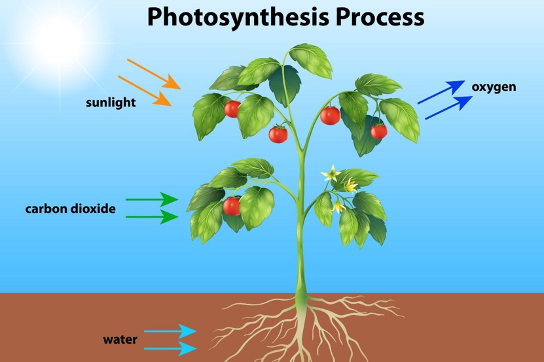
Figure 2. Process of photosynthesis, source: https://dotandlinelearning.com/blog/biology/chapter-6-photosynthesis/
The process occurs in two main stages:
Stage 1: Capturing Light Energy (Light-Dependent Reactions)
• Takes place in the thylakoid membranes of chloroplasts.
• Sunlight is absorbed by chlorophyll, exciting electrons and starting an energy transfer process.
• Water molecules are split into oxygen, protons, and electrons, releasing oxygen gas into the atmosphere.
• The energy captured is stored in special molecules called ATP (adenosine triphosphate) and NADPH (nicotinamide adenine dinucleotide phosphate), which will be used in the next stage.
• Occurs in the stroma, the fluid inside chloroplasts.
• Carbon dioxide from the air is used to build glucose molecules.
• The ATP and NADPH from the first stage provide the energy to convert carbon dioxide into sugars.
• This stored energy is used for plant growth, reproduction, and the production of essential materials like starch and cellulose.