
Why is Photosynthesis Essential?
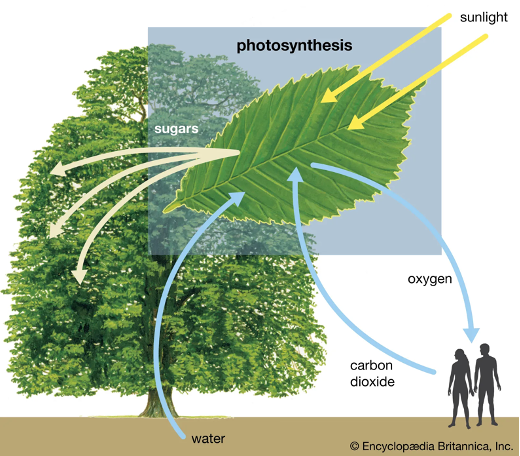
Figure 3. Photosynthesis essential, source: https://www.britannica.com/science/photosynthesis
Photosynthesis is the foundation of life on Earth, supporting ecosystems and maintaining environmental balance. Its key contributions include:
- Oxygen Production: Plants release oxygen, making life possible for animals and humans.
- Energy Storage: Sunlight is converted into chemical energy, which supports plant growth and provides food for other organisms.
- Carbon Cycle Balance: Photosynthesis helps regulate atmospheric carbon dioxide, reducing the effects of climate change.
The ability of plants to efficiently capture sunlight has inspired technological advancements in sustainable energy. Scientists are studying photosynthesis to develop artificial photosynthesis systems that mimic plant energy production, potentially leading to clean energy solutions such as:
- Solar Panels: Photovoltaic cells in solar panels work like chlorophyll, absorbing light and converting it into usable energy.
- Biofuels: Some microorganisms use photosynthesis to create fuels that could replace fossil fuels.
- Artificial Leaves: Scientists are developing synthetic materials that can use sunlight to produce clean energy, just like real leaves.
Nature has perfected solar energy conversion through photosynthesis, a process that sustains life and balances our environment. By studying plants, scientists and engineers are unlocking new ways to harvest energy sustainably. If we can learn to capture sunlight as efficiently as plants, we may move closer to a cleaner, greener future.
Photosynthetic efficiency refers to how effectively plants convert solar energy into chemical energy. While theoretical maximum efficiency is approximately 11% under ideahttps://www.britannica.com/science/photosynthesis/Energy-efficiency-of-photosynthesisl conditions, real-world efficiency ranges between 3–6% due to factors like light absorption limits and energy losses during conversion processes (https://www.britannica.com/science/photosynthesis/Energy-efficiency-of-photosynthesis). For example:
- Only photons within the 400–700 nm range are usable.
- Energy losses occur during electron transport and sugar synthesis.