Benefits Linked to Brain Activity and Behavior
Benefits Linked to Brain Activity and Behavior:
- Boosts Alpha Waves (Relaxation): Bright light exposure increases alpha power in EEG, signaling improved calmness and cognitive readiness (Berger et al., 2022).
- Improves Sleep-Wake Cycles: A Stanford study found that combining light therapy with behavioral techniques gave adolescents 43 minutes of extra sleep per night, reducing sleep-related stress and improving daily functioning (Stanford Medicine, 2019).
- Reduces Depression Symptoms: Bright light therapy enhances brain arousal and mood regulation, which has been linked to increased prefrontal activity, which is key for emotional regulation in teens (Berger et al., 2022).
- Resets Cortisol and Melatonin Cycles: Early-morning exposure to bright light naturally suppresses melatonin (the sleep hormone) and boosts cortisol (the alertness hormone), helping the brain feel more awake and emotionally balanced during the day ( Scheer & Buijs, 1999).
· Enhancing EEG Applications Through AR
Integrating EEG with Augmented Reality (AR) provides a promising direction for developing immersive, responsive environments that reflect real-time neurophysiological states. Viczko et al. (2021) explored this synergy by combining an AR meditation experience with frontal gamma asymmetry neurofeedback using a Muse EEG headband. Participants, all experiencing moderate anxiety or depression, took part in an AR experience designed to evoke positive emotional states. They explicitly used the Healium app to visualize butterflies emerging from a chrysalis as users engaged in loving-kindness meditation.
The study revealed that both the AR-only and AR-plus-neurofeedback (AR+NF) groups experienced significant improvements in mood, including reduced tension and increased calmness, but the AR+NF group reported higher engagement. EEG data showed increased alpha activity and trending changes in gamma activity, particularly in brain regions linked with emotional regulation, such as the anterior cingulate cortex and insula. These findings suggest that EEG-enhanced AR can serve as a real-time feedback loop, adjusting the environment based on brainwave activity to deepen meditative or therapeutic outcomes.
Crucially, the study illustrates how AR can enhance EEG-based research and interventions by:
- Visualizing neurofeedback in context, increasing user engagement.
- Allowing for interactive emotional regulation experiences, primarily through positive feedback mechanisms like visual rewards (e.g., butterflies hatching when EEG thresholds are met).
- Supporting real-time stress monitoring, with EEG acting as a dynamic biometric interface that influences AR content.
Thus, integrating EEG with AR offers a novel educational and therapeutic approach and enhances user awareness of their internal states. It is a powerful tool for applications in stress management, emotional self-regulation, and mental health education.
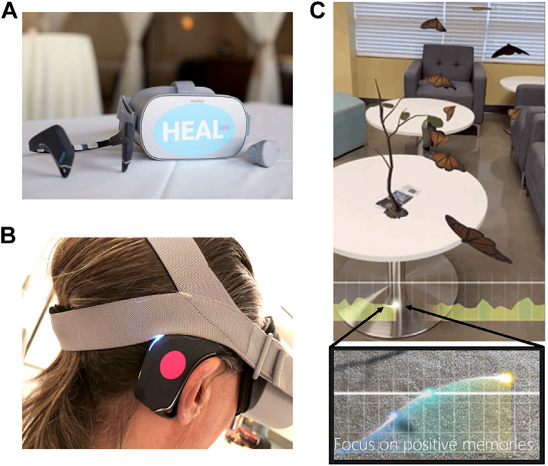
Figure 8. Examples of the equipment and AR visual experience: (A) Muse headband for neurofeedback and the Healium augmented reality headset. (B) The Healium neurofeedback setup is worn. (C) A screenshot of the AR-guided meditation with chrysalis hatching neurofeedback. Below is an enlarged image of the threshold line (solid) and “firefly” depicting gamma asymmetry ratios, with part of the meditation instruction shown in the text (Viczko et al., 2021).