Realtà Aumentata (AR) nella Scienza dei Materiali Bio-Ispirati
The complexity of biological material structures often makes their study difficult using traditional methods. Augmented Reality (AR) offers a transformative approach to the visualization, analysis, and experimentation of biological materials through:
The creation of interactive 3D models of biological structures such as spider silk fibers, honeycomb configurations, and soft tissue scaffolds.
Enabling real-time material simulations, allowing users to modify parameters such as strength, elasticity, and biodegradability to study their effects.
Overlaying AR-enhanced microscopy, helping students explore biological structures at the nano and microscopic scale (Bacca et al., 2014).
The development of AR-based material testing applications to simulate mechanical stress, durability, and self-healing properties of bio-inspired materials (Billinghurst et al., 2015)
The body is a chemical laboratory that processes substances derived from nature and converts them into energy, building materials, waste, and various multifunctional structures (Mann 1995). Natural materials have been recognized by humans as sources of food, clothing, comfort, etc., including, to name a few, fur, leather, honey, wax, milk, and silk (Carlson et al. 2005). Although some of the creatures and insects that produce materials are relatively small, they can produce sufficient quantities of materials for human consumption in mass production (e.g., honey, silk, and wool). The use of natural materials can be traced back thousands of years. Silk, produced to protect the cocoon of the silkworm, possesses excellent properties such as beauty, strength, and durability. These benefits were recognized by humans and the need to produce them in any desired quantity led to the production of artificial versions and imitations. The fascinating capabilities of natural materials include self-healing, self-replication, reconfigurability, chemical equilibrium, and multifunctionality. Many artificial materials are processed by heating and under pressure, in contrast to nature, which always operates under environmental conditions.
The production of bio-fabricated materials generates a minimal amount of waste and pollution, resulting in them being mostly biodegradable and recycled by nature. By learning to process such materials, we can increase our material choices and improve our ability to produce recyclable materials that better protect the environment (Bar-Cohen, 2006).
Bioinspiration leads directly to an area of science that is currently growing in importance and interest: the science, and in particular the materials science, of soft matter (Hamley IW, 2013). Materials science has developed around “hard” structures (durable, fixed in shape and function, resistant to damage). Most biological systems (even bones, to some extent) are “soft”, that is, elastic and easily deformable. This type of matter is much less explored than “hard” matter and therefore offers opportunities for discoveries and inventions still relatively unexplored (in science) and at the same time both independent of biology and relevant to biology. Understanding the many ways in which organisms use soft matter such as muscles, tendons, connective tissues, membranes, and nerves offers a wide range of stimulating ideas for the new science of soft matter (Whitesides, 2015).
There are some examples of biological materials and their specifics:
- Strong spider web fibers
The spider is one of the best “production engineers” in biology, with an incredible ability to produce materials. It builds its web from a very strong, insoluble, and lightweight continuous fiber, and the resulting web is resistant to rain, wind, and sunlight. It is made up of very thin fibers, barely visible, so that it can perform its function as an insect trap. The spider has enough raw material for its silk to extend the web over great distances relative to its body. Webs of various shapes (even flat ones) are often seen woven between distant trees, and the web is surprisingly large compared to the size of the spider. Recent advances in nanotechnology promise the production of thin, continuous fibers with enormous strength. To this end, an electrospinning process has been developed (Dzenis 2004) that allows the production of fibers with a diameter of 2 µm from polymer solutions or melts in high electric fields. The resulting nanofibers have proven to be relatively uniform and have not required extensive cleaning.
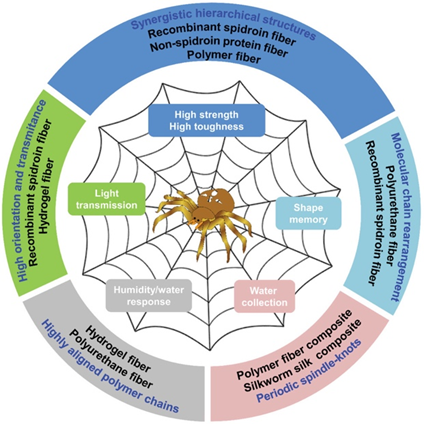
Figure 3: Spider web, source: Jiatian & all, 2021
AR Applications in Spider Silk Research
3D AR simulations of spider silk structures can demonstrate the molecular interactions responsible for its strength and flexibility.
AR-based tensile test simulations allow students to experiment with different biopolymer modifications to enhance artificial silk production.
- The bee as a producer of different materials
The bee is known for producing honey from the nectar it collects from flowers, but it also produces a wax honeycomb. Candles were once made from this beeswax, but with the advent of the petroleum industry, candles are now mostly made from paraffin (Bar-Cohen, 2006).
AR Applications in Honeycomb Engineering
Virtual AR testing tools allow students to modify honeycomb cell sizes and observe real-time changes in load-bearing capacity. Comparative AR modeling can overlay natural honeycomb structures with engineered lattice materials, providing a comparative analysis of efficiency (Dünser et al., 2012).
- Multifunctional materials
The use of materials that perform multiple functions allows nature to equip its living beings with lower body weight. The concepts of materials and multifunctio