
1. Explore
Chromosomal Translocation
A chromosomal translocation occurs when a segment of one chromosome breaks off and attaches to another chromosome or to a different location on the same chromosome. This type of mutation changes the position of genes, which can affect how they function (Griffiths et al., 2019).
There are two main types of chromosomal translocations:
Balanced Translocation
In a balanced translocation, no genetic material is lost or gained—DNA segments are simply rearranged. In many cases, individuals with balanced translocations do not show visible symptoms. However, problems may appear during reproduction, as balanced translocations can increase the risk of infertility or genetic disorders in offspring (Strachan & Read, 2018).
Unbalanced Translocation
An unbalanced translocation occurs when genetic material is lost or duplicated. This often leads to serious biological consequences because the normal balance of genes is disrupted. Unbalanced translocations are associated with conditions such as cancer, infertility, and genetic disorders including Down syndrome (NHGRI, 2023).
Translocations can also result in gene fusions, where parts of two different genes become joined together. These fused genes may produce abnormal proteins that interfere with normal cell function and can contribute to disease development, especially in certain cancers (Alberts et al., 2015).
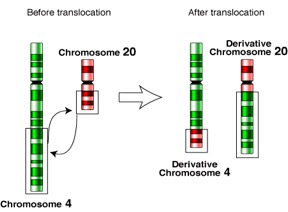
Figure 5. Chromosomal translocation