
1. Explore
Ethical Concerns
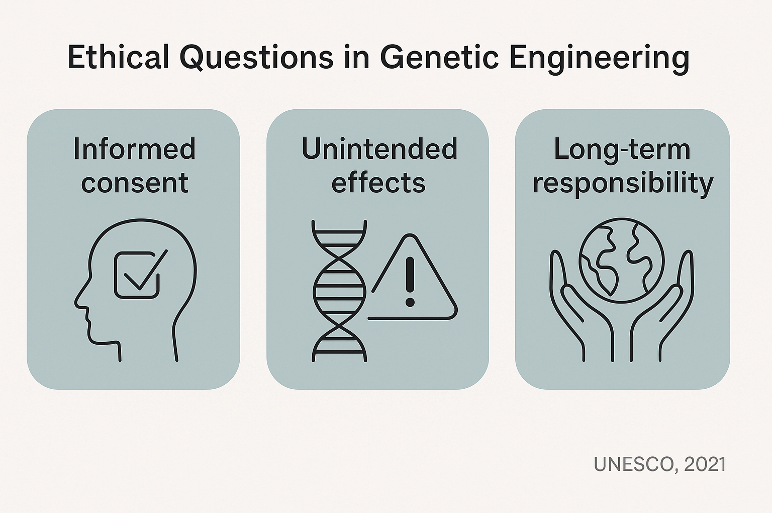
Figure 2. Ethical questions in genetic engineering include informed consent, unintended effects, and long-term responsibility (UNESCO, 2021).
Apart from biological risks, gene editing also raises serious ethical concerns. One important question is fair access. Will gene editing be available to everyone, or only to wealthy people? If only some groups can afford genetic treatments or enhancements, this could create a genetic class divide in society.
Another concern is the idea of designer babies. While gene editing could help prevent serious genetic diseases, some people worry that parents might want to choose traits such as appearance, intelligence, or physical strength. This could increase discrimination and put pressure on society to value certain genetic traits more than others.
There are also important questions about rules and responsibility. Should scientists be allowed to edit human embryos? Who should decide what kinds of gene editing are acceptable? Governments, scientists, and international organisations all play a role, but clear laws and ethical guidelines are still developing.
Because the effects of gene editing can last for generations, scientists must think about long-term responsibility. Decisions made today could affect future children, ecosystems, and societies. For this reason, education and public discussion are essential to help people understand both the benefits and the risks of gene editing (UNESCO, 2021)