
1. Explore
How Gene Editing Works
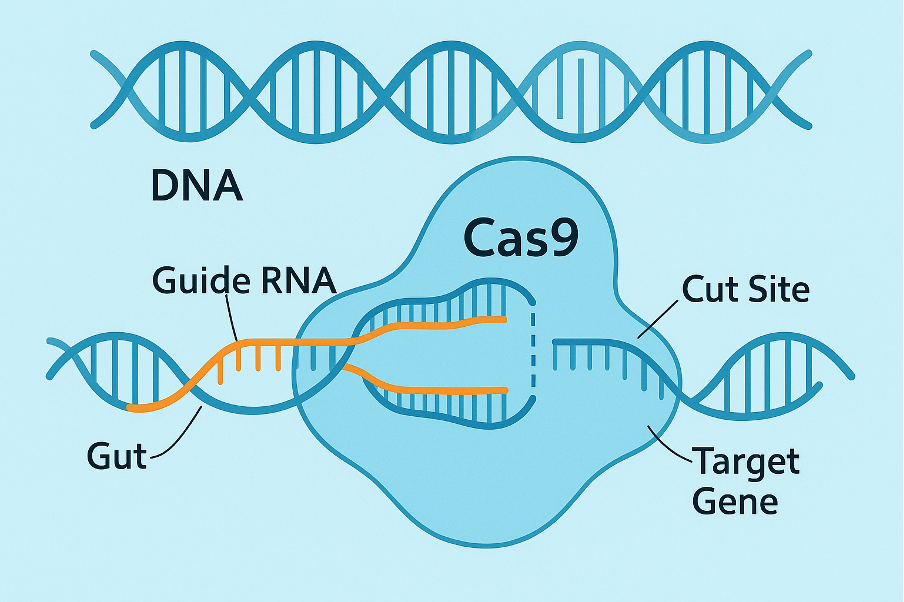
Figure 1. A simplified diagram of CRISPR-Cas9 editing a DNA strand inside a human cell.
Gene editing is a modern biotechnology method that allows scientists to change DNA. One of the most important tools for gene editing is CRISPR-Cas9. This technology was adapted from a natural defence system found in bacteria (Doudna & Sternberg, 2017).
CRISPR-Cas9 works like molecular scissors. It cuts DNA at a specific place. After the cut, scientists can remove, replace, or add genetic material. In this way, they can change genetic traits in plants, animals, or humans.
Gene editing has many possible benefits. Scientists have used CRISPR to study treatments for genetic diseases such as sickle cell anaemia and muscular dystrophy (Lander, 2015). In agriculture, gene editing can help crops become more resistant to pests, drought, or disease. Some researchers have also suggested using gene editing to reduce mosquito populations that spread diseases like malaria.
However, gene editing also involves serious risks. One major problem is off-target effects, when CRISPR cuts the wrong part of the DNA. This can cause unintended genetic changes that may be harmful (UNESCO, 2021). These effects might not appear immediately and could even be passed on to future generations if embryos are edited.
Another risk is linked to how genes interact with each other. A single gene often has several functions. Editing one gene to solve a problem may accidentally affect other important processes in the body, leading to unexpected consequences.
One of the most controversial cases happened in 2018, when a scientist in China announced the birth of gene-edited babies. The embryos were edited to make them resistant to HIV. This caused strong international criticism because the long-term health effects were unknown and the babies could not give informed consent (Cyranoski, 2019). The scientific community described the experiment as unethical and irresponsible.
In addition to scientific risks, gene editing raises ethical and social questions. Will everyone have equal access to this technology, or only wealthy people? Could genetic enhancement increase inequality or discrimination? These concerns show why gene editing must be carefully controlled and discussed by society.